Grammy Awards

January 31st, 2010

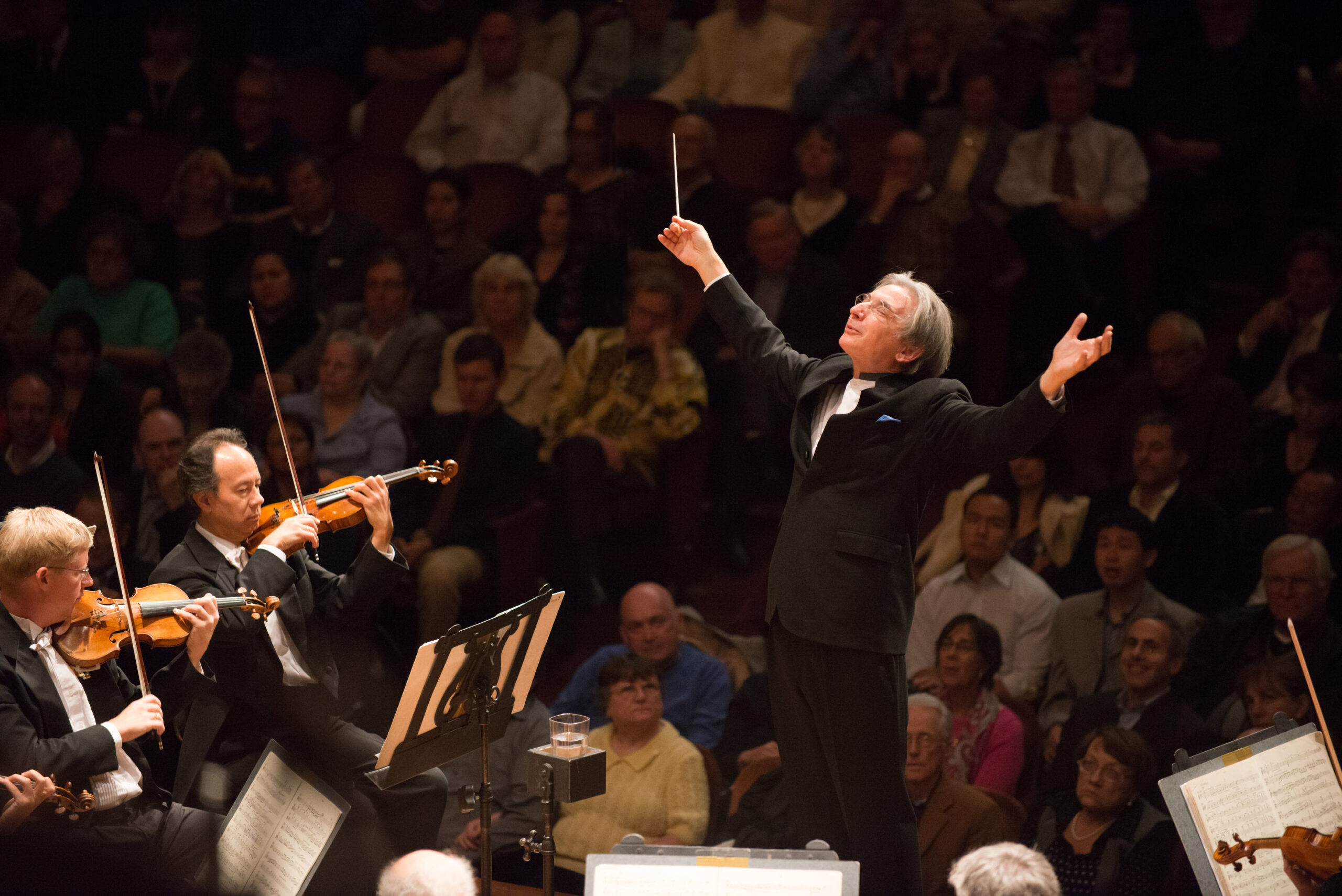
The San Francisco Symphony’s (SFS) live concert recording of Gustav Mahler’s Symphony No. 8 and the Adagio from Symphony No. 10 conducted by Music Director Michael Tilson Thomas (MTT) received three Grammy® Awards in the categories of Best Classical Album, Best Choral Performance for Michael Tilson Thomas, conductor; Ragnar Bohlin, Kevin Fox & Susan McMane, choir directors, and Best Engineered Classical Album for Engineer Peter Laenger at the 52nd annual Grammy Awards held in Los Angeles. This recording is the latest release in the ongoing Mahler recording cycle for the orchestra’s own SFS Media label. Mahler’s Symphony No. 8 in E flat major, Symphony of a Thousand, was recorded live in Davies Symphony Hall November 19, 21, 22 and 23, 2008 and features performances by sopranos Erin Wall, Elza van den Heever, and Laura Claycomb; mezzo-sopranos Katarina Karnéus and Yvonne Naef; tenor Anthony Dean Griffey; baritone Quinn Kelsey; and bass-baritone James Morris. The San Francisco Symphony Chorus under the direction of Ragnar Bohlin is featured on the recording as well as the San Francisco Girls Chorus, directed by Susan McMane and the Pacific Boychoir under the direction of Kevin Fox. The Adagio from Symphony No. 10, which opens this two-disc set, was recorded April 6-8, 2006. A short video with behind the scenes footage and insights from the recording can be viewed here: “A Universe of Sound: Recording Mahler’s Symphony No. 8.”

With these three awards the SFS’s Mahler cycle has now received a total of seven Grammy awards. The first recording, Mahler’s Symphony No. 6, was released in February 2002 and won the Grammy for Best Orchestral Performance. Mahler’s Symphony No. 3 and Kindertotenlieder, featuring mezzo-soprano Michelle De Young won Best Classical Album in 2003. Mahler’s Symphony No. 7 won Best Classical Album and Best Orchestral Performance in 2007. The SFS has garnered seven additional Grammy Awards for recordings outside of the Mahler cycle.

Since the Mahler recording project began in 2001, the San Francisco Symphony has recorded all of the Mahler symphonies, the Adagio from the unfinished Tenth Symphony, Kindertotenlieder and Das Lied von der Erde and released a re-mastered recording of Das klagende Lied. Additional works still to be released include Mahler’s Rückert Lieder, Songs Of A Wayfarer (Lieder eines fahrenden Gesellen) and selected songs from Des Knaben Wunderhorn. All of the new SFS/MTT Mahler symphony recordings were produced by Andreas Neubronner and have entered the top ten of the Billboard Classical Chart.

Yo-Yo Ma at S.F. Symphony

January 21st, 2010

by Joshua Kosman, San Francisco Chronicle

No one in the enthusiastic audience that packed Davies Symphony Hall for the San Francisco Symphony’s Wednesday night concert was under any illusions about the headliner. That would be cellist Yo-Yo Ma, beginning a two-week residency under the banner of the orchestra’s Project San Francisco.

But Michael Tilson Thomas - always mindful of the verities of showbiz - gave them more than they came for.

If listeners braved the elements to hear Ma give a fervid and fiercely expressive performance of Shostakovich’s Cello Concerto No. 2, they also got a superb reprise of Tchaikovsky’s “Little Russian” Symphony and a graceful, evocative account of Sibelius’ tone poem “The Oceanides.” Thomas even offered an amuse-bouche, an unannounced rendition of the Polka from Shostakovich’s ballet “The Age of Gold” to allow for any rain-soaked late arrivals.

That’s what they call giving full value.

Not to say that Ma’s tonally ravishing and rhetorically forthright performance wasn’t the centerpiece of the program. It was. (For Saturday’s repeat performance, the Shostakovich will be replaced by Brahms’ Double Concerto, with Ma and violinist Colin Jacobsen as soloists.) But this was also an object lesson in how not to let star power take over to the exclusion of other things.

It may also be that it takes an artist as eloquent and insightful as Ma to fully sell this dark, gnarled product of Shostakovich’s last years.

The melodies, especially in the first movement, are plangent but veiled, as though there were some urgent emotional subtext that the soloist (or the composer) can’t bring himself to address directly. The sense of relief that arrives with the corrosive scherzo and the ironically dapper finale (played without a break) is palpable.

Ma and the orchestra conspired to strike that dual note perfectly. The solo writing in the opening pages set a tone of reluctant expressivity, while the orchestra’s angular expostulations seemed to be needling him toward greater candor. The latter movements thrived on the music’s rhythmic propulsiveness and aggressive

swagger.

What’s striking too in this concerto, as in many of the composer’s late works, is the transparency of the orchestral writing, and the frequency with which the soloist finds himself in intimate dialogue with just one or two instruments. Wednesday’s performance featured superb solos by hornists Nicole Cash and Jonathan Ring, and percussionists Jack Van Geem and James Lee Wyatt III.

If the two Shostakovich pieces created a world of emotional ambiguity, the rest of the music wore its heart winningly on its sleeve.

The Sibelius, in its first Symphony performance, conjured up the water nymphs of its title in cresting waves of sound and sparkling runs of woodwinds in thirds. Flutists Robin McKee and Linda Lukas and clarinetist Luis Baez handled that aspect deftly.

And for sheer good spirits and melodic effusion, there was the Tchaikovsky, occupying the second half of the program in a crisp, trim little rendition that was absolutely irresistible. Perhaps this symphony, the composer’s second, lacks some of the soul-stirring profundity of his later works; I don’t know. But its charm and vivacity more than compensate, and Thomas and the orchestra played it magnificently.

Tilson Thomas’s Short List

November 6th, 2009


Eight-time Grammy Award winner Tilson Thomas travels the world as music director of the San Francisco Symphony and principal guest conductor of the London Symphony Orchestra. When he puts down his baton, you might catch him in his kitchen trying out recipes or blissing out with his eye mask.

Insights from the Coen brothers
A Serious Man, the Coen brothers’ new film, is funny, dark and a profound insight into the essence of the Jewish spirit. Their exploration of the uncanny overlap between Jewish liturgical music and the music of Jefferson Airplane really got to me. The last scene will haunt you forever.

Spice odyssey
In My Bombay Kitchen, Niloufer Ichaporia King shares pungent memories and recipes from her mother’s kitchen. Her book is beguilingly written, and even better, it reliably produces fresh and comforting flavors.

Iconic YouTube tunes
I am captivated by the treasure trove of the iconic and the absurd on YouTube. Recent favorite videos include Laura Nyro’s “Save the Country,” Eddie Jackson and Jimmy Durante performing Bill Bailey, Maria Callas’ live performance of “Casta Diva” and the inspired keyboard antics of Elton Dog’s (yes, he is a dog) “Morning Song.”

Archival film treats
I continue to find jewels in the Criterion Collection’s classic films on DVD. Digitally restored masterpieces presented in crisp new prints and clean sound are a reminder of how enduring the message of a film can be. What a joy to know that there are still stunning works of Bergman, Kurosawa, Tarkovsky, Hitchcock and others to discover.

Comforting shades
In a life of overstimulation and too many changes of scene, the Tempur-Pedic Eye Mask takes you instantly to a quieter and safer place. Aah, blessed recharge.

A Chinese Music-History Lesson in Fancy Dress

November 3rd, 2009

by Allan Kozinn

The Juilliard School has made a handful of contributions to Ancient Paths, Modern Voices, Carnegie Hall’s expansive festival of Chinese culture, but the student musicians may look back on their Wednesday evening performance as the highlight in terms of star power and musical heft. With Michael Tilson Thomas on the podium, the Juilliard Orchestra packed onto the Carnegie stage to play a premiere by the Chinese composer Chen Qigang and works by Lou Harrison and Mahler, with the pianist Lang Lang, the mezzo-soprano Anne Sofie von Otter and the tenor Gregory Kunde as the soloists.

Like several orchestral programs in this festival, the concert was in some ways a music-history lesson in fancy dress. “The Family of the Court,” the opening section of Harrison’s “Pacifika Rondo” (1963), was included as a curtain raiser because the composer’s lifelong fascination with Asian forms and timbres yielded an idiosyncratic hybrid of Eastern and Western sounds. Here he imagined — rather cinematically — the music of the Tang dynasty, which ruled China for almost 300 years starting in the early seventh century. You would not bet the store that Tang music actually sounded like “Pacifika Rondo,” but the Juilliard musicians gave the score, with its sliding string and flute melodies and full-throttle percussion, a vigorous, colorful reading.

Mahler earned his berth on the program by drawing the texts for “Das Lied von der Erde” from “Die Chinesische Flöte” (“The Chinese Flute”), Hans Bethge’s collection of Chinese poetry, also from the Tang period. Mahler’s approach to his Chinese inspiration was to ignore it: he was drawn to these texts because of their universality, and nothing in his vast score alludes to Chinese music, real or imagined.

This was, however, the Juilliard Orchestra’s moment in the sun, and it responded to Mr. Thomas, an eloquent Mahler conductor, with power, flexibility and, in the quieter movements, an admirable transparency. Mr. Kunde sometimes strained in the upper reaches of Mahler’s tenor line, but otherwise sang attractively. Ms. von Otter’s performance was the picture of interpretive subtlety, with carefully calibrated dynamics and coloration and a velvety tone that perfectly suited these graceful world-weary texts.

Mr. Lang presided over the part of the program devoted to actual Chinese music. With the stage to himself — the orchestra cleared off — he played four of the short folk-song-inspired piano works of the sort he sometimes performs as encores. For an American listener these called to mind the music of Ethelbert Nevin and other late-19th-century salon composers, not because of any musical similarities but because, like Nevin and his colleagues, the composers here — He Luting, Lu Wencheng and Sun Yiqiang — sought a hybrid of distinctively national themes and European harmonies and textures. Debussy and Chopin’s influence, particularly, was palpable.

Mr. Thomas and the orchestra rejoined Mr. Lang for Mr. Chen’s “Er Huang,” a piano concerto written for the occasion. Mr. Chen’s inspiration was traditional Peking opera. Its title refers to a family of gracefully melancholy themes, and in a way this gentle, often dreamy score is a requiem for a dying style. Mr. Lang, who can be a hyperkinetic performer, played this music — and the solo pieces as well — with the gracefulness and dignity it demanded, and couched Mr. Chen’s melodies in a rich, singing tone.

Michelle Obama and I Agree: Commit to the Arts in Schools

October 14th, 2009

While foreign finance ministers and central bankers met a few weeks ago at the G-20 summit to discuss the state of the world’s finances, it was something that Mrs. Obama, not Mr., said that made my ears perk up.

Speaking at the Pittsburgh Creative & Performing Arts School, Michelle Obama gave an 11-minute address about the importance of the arts in our schools. I appreciated her expressing the conviction that the arts aren’t somehow an “extra” part of our nation’s life, but should be an essential part of it.

Mrs. Obama’s sentiments couldn’t have come at a more appropriate time.  With state budgets under attack, we in the arts are bracing for a familiar song: whether or not to fund arts in the schools.  When times get tough, the arts programs are always among the first to be eliminated from the curriculum.

Cutting arts funding is a short-sighted move whose consequences contribute to the deepening cultural disconnect occurring in our society.

Specifically, a generation raised without awareness of the arts, without the opportunity to experience the arts themselves by making music, making drawings, making poems, is a disenfranchised one.   Art is the essence of who we are and our society is strengthened whenever young people are given the opportunity to directly share this legacy.

Whether this mission is accomplished through advocacy for arts-education funding, through music or arts programs in school, or through impassioned performances, we must continue our commitment to keep art and music as living traditions.

I am, of course, an advocate for classical music, whose twelve hundred year unbroken continuum allows us to intensely experience what it meant to be alive in 1200 or 1600 or 1900.  I believe that everyone should have the opportunity to experience those world views.  But, this can only be done by giving young people the keys that open up the whole world of music to them.  These were the keys my parents and very importantly my teachers in public schools offered me.

The problem is that we, as a society, have abandoned the responsibility of exposing our young people to the very language of music.  Today, the amount of music instruction in both elementary and secondary classrooms is decreasing; many recent reports highlight the disparity between public rhetoric about the value of arts education and the stark decline in curricular offerings across the nation – a phenomenon exacerbated by the growing pool of classroom teachers whose own education and teacher preparation programs included minimal offerings in the arts.

Music is about the human spirit, about our common heritage. When younger people are given a chance to experience classical music, they like it.

We must advocate for this in our schools, but also not sit idly by as artists.  The biggest responsibility that we have in the performing arts organizations have today—a responsibility we have no option but to accept—is to help young people understand how music works and what it means. Those who know this music, know the arts, can experience a deeper sense of life itself.

Michael Tilson Thomas and the San Francisco Symphony premiere second season of Keeping Score PBS television series October 15

August 31st, 2009

SAN FRANCISCO, Calif. (June 10, 2009) – The San Francisco Symphony and Michael Tilson Thomas premiere the second season of the Keeping Score television series on PBS Thursday, October 15, 2009 at 10 p.m. (check local listings). Keeping Score is the San Francisco Symphony’s national project to make classical music more accessible and meaningful to people of all ages and musical backgrounds, and a key component of its almost century-long history of music education.

More than five million viewers tuned into the first season of Keeping Score on PBS in November 2006 with episodes on Ludwig van Beethoven, Igor Stravinsky, and Aaron Copland. Keeping Score Season 2 features three new programs that explore the music and stories behind Hector Berlioz’s symphonic love letter Symphonie fantastique; Charles Ives’s sonic portrait of New England in his Holidays Symphony; and Dmitri Shostakovich’s Symphony No. 5, a work that may have saved his life. The Berlioz episode will air nationally on PBS Thursday, October 15 at 10 p.m., with the Ives episode following on Thursday, October 22 at 10 p.m. and the Shostakovich episode airing Thursday, October 29, also at 10 p.m. (check local listings). These three new documentary programs, plus two live concert programs, are offered in high definition and surround-sound and are designed to engage and entertain, regardless of the viewer’s musical background.   The programs work in tandem with an interactive website, www.keepingscore.org, a national radio series, and a national model education program for K-12 teachers that helps them integrate classical music into core subjects.

“The second season of Keeping Score takes the series to another level,” said Michael Tilson Thomas, Music Director of the San Francisco Symphony. “The cinematic qualities and visual storytelling in these programs give us even more meaningful connections to the music of Hector Berlioz, Charles Ives, and Dmitri Shostakovich, three of my favorite composers.  Coupled with the interactive companion web site, these new shows will give people a truly unique way to experience and enjoy the music.”

Keeping Score continues to be one of the great success stories for this Orchestra,” said John D. Goldman, President of the San Francisco Symphony. “Millions of people all over the globe are touched by the captivating documentaries, the unprecedented production qualities of the live performance programs, the unique interactivity the web site provides, and arts integration in K-12 classrooms that begins to instill a lifelong love of music, which is the key to its long-term success.  Keeping Score touches all of these levels and all in the most meaningful ways I can imagine.”

TELEVISION SERIES
Keeping Score Season 2 presents three one-hour documentary-style episodes and two live concert programs that begin airing nationally on PBS stations beginning Thursday, October 15, 2009 at 10 p.m. (check local listings).  In Keeping Score Season 2, Michael Tilson Thomas and the musicians of the San Francisco Symphony explore the music and stories of Hector Berlioz, Charles Ives and Dmitri Shostakovich, composers who each struggled with musical language as a unique expression of their ideas.  Shot in a variety of locations throughout the world, the Keeping Score programs offer audiences a unique journey into the lives and music of the featured composers.  The programs are presented nationally by KQED Public Media in San Francisco. Click here to watch the trailers.

Episode One: With Symphonie fantastique, Hector Berlioz confessed his unique artistic vision. It was a symphonic love letter, part psychological self-portrait, part fantasy about the life of an artist, and it expressed his passion for a beautiful woman. Michael Tilson Thomas searches for the inspirations of Berlioz and his music, from his roots in the French Alps to the theater in Paris where the work was premiered, and reveals the musical secrets of this greatest of Romantic symphonies.

Episode Two: American composer Charles Ives created his Holidays Symphony as a haunting sonic portrait of New England at the turn of the 20th century, at turns sentimental and chaotic. Michael Tilson Thomas explores the riddle of Ives the loyal son and businessman versus Ives the musical maverick who made listeners confront their understanding of what music could be. Filmed on location in New England and New York City.

Episode Three: The Fifth Symphony of Dmitri Shostakovich is the story of a fall from grace and redemption. Shostakovich was the golden boy composer until, virtually overnight, his patriotism was questioned and condemned in the most public way possible. Written in 1937 in Stalinist Russia, the Fifth Symphony marked his triumphant return. But the question remains: what did the composer mean to say with this enigmatic music? In scenes filmed in St. Petersburg and Moscow, Michael Tilson Thomas and the San Francisco Symphony offer clues to unlocking Shostakovich’s musical secrets and make the case for how this symphony may have saved his life.

WEB SITE: www.keepingscore.org
The Keeping Score web site, www.keepingscore.org, is designed to give people of all musical backgrounds an opportunity to explore signature works by composers Hector Berlioz, Charles Ives, and Dmitri Shostakovich in depth, and at their own pace.  www.keepingscore.org offers an interactive area for each composer, with clues and context to illuminate the musical mysteries presented by the television episodes. The interactive audio and video explores the composers’ scores and pertinent musical techniques as well as the personal and historical back stories.  The site is designed to particularly appeal to high school, college and university music appreciation students and their teachers, and its interactive learning tools offer a unique and in-depth online learning experience. The redesigned site includes all of the groundbreaking and acclaimed interactives and content of the existing KeepingScore.org website, with the material on composers Beethoven, Stravinsky, Copland and Tchaikovsky integrated in a new and more user-friendly way.  The revamped site also includes a new historical timeline that takes users deeper into the seven individual composers’ political, social, and cultural milieus as well as downloadable lesson plans created by teachers who have experienced the Keeping Score Education program. The new material on www.keepingscore.org will launch in June 2009.

RADIO SERIES
Keeping Score’s new radio series debuts next winter with thirteen episodes revealing thirteen musical revolutions: composers, compositions or musical movements that changed the way people heard, or thought about, music.  Each program will explore the historical backdrop and musical precursors to the revolutionary change, as well as examine the aftershock and the lasting influence of that moment in music history. Host Suzanne Vega returns to join Michael Tilson Thomas and the San Francisco Symphony, collaborators on the Peabody Award-winning The MTT Files and American Mavericks radio programs, some of the most listened-to classical music programs of all time.

EDUCATION PROGRAM
Designed to help students learn through the arts, the Keeping Score Education program builds on the themes and concepts from the Keeping Score television series. The model program offers K-12 teachers training, materials, and support to integrate classical music into their classrooms, including core subjects such as science, math, English, history and social studies.  Participating teachers from partner school districts receive training by San Francisco Symphony musicians, educational staff and a variety of arts educators.  The Keeping Score Education program is expanding this season to include San Francisco Unified School District middle and high school teachers, in addition to existing partner sites in Fresno, Sonoma and Santa Clara counties; Flagstaff, Arizona; and the Oklahoma A+ Network statewide program. An integral part of the program is the annual Keeping Score Summer Teacher Institute, this year scheduled for June 17-21, 2009, a multi-faceted professional development experience that builds teachers’ understanding of both music and integrated curriculum design. The Keeping Score community engagement program aims to further participation in, and exposure to, classical music through distribution of specially prepared Keeping Score materials and partnerships with schools, arts organizations and presentations in community and cultural centers.  To learn more about the Keeping Score education and community programs, please visit http://www.keepingscore.org/education.

HOME VIDEO and DIGITAL DISTRIBUTION
Keeping Score Season 2 will be released on DVD and Blu-Ray High Definition formats through SFS Media, the San Francisco Symphony’s own label. Each of the three DVDs features the documentary episode coupled with the concert performance of the work, with Michael Tilson Thomas leading the San Francisco Symphony.  The concert performances are captured in full HD at Davies Symphony Hall in San Francisco, with outstanding production values. The San Francisco Symphony is the first orchestra to distribute its product on Blu-Ray disc.  DVD sales begin this fall at the San Francisco Symphony’s online store at www.shopsfsymphony.org and retail outlets worldwide. After the fall 2009 broadcast, PBS will release Keeping Score Season 2 through its digital distribution channels, including iTunes, Zune, and others.  Keeping Score Season 1 will be available on download-to-own channels in the fall shortly before Keeping Score Season 2 premieres on PBS in October.

FUNDING
Lead funding for Keeping Score is provided by the Evelyn & Walter Haas, Jr. Fund with generous support from Nan Tucker McEvoy, The James Irvine Foundation, Marcia and John Goldman, Ray and Dagmar Dolby Family Fund, The Andrew W. Mellon Foundation, the National Endowment for the Arts, William and Gretchen Kimball Fund, Lisa and John Pritzker, Mrs. Alfred S. Wilsey, Koret Foundation Funds, Lynn and Tom Kiley, Anita and Ronald Wornick, Roselyne Chroman Swig, the Acacia Foundation, Margaret Liu Collins and Edward B. Collins, The Bernard Osher Foundation, Mary C. Falvey, Ann and Gordon Getty Foundation, Dr. and Mrs. Jeffrey P. Hays, David and Janyce Hoyt, and others.

About The San Francisco Symphony

Founded in 1911, the San Francisco Symphony (SFS) has a long and distinguished history marked by artistic excellence, educational initiatives, acclaimed recordings and multimedia projects, and innovative programming.  Beginning their fifteenth season together this fall, Music Director Michael Tilson Thomas and the SFS have formed a musical partnership hailed for its revitalization of the classical music experience.  The first Orchestra to feature national symphonic radio broadcasts in 1926, the SFS remains a leader in the field of electronic media with endeavors such as the Grammy Award-winning Mahler recording cycle for the Orchestra’s own SFS Media label on SACD, Minnesota Public Radio’s Peabody Award-winning American Mavericks and The MTT Files radio series, and the Emmy Award-winning PBS/KQED Public Television production of the SFS’ Sweeney Todd in Concert.  The Orchestra’s commitment to education and its community, begun in 1919 with the development of Concerts for Kids, is today recognized nationally and internationally for programs including Adventures in Music, the San Francisco Symphony Youth Orchestra, Music for Families, and www.sfskids.com. For additional information, please visit www.sfsymphony.org.

About KQED
KQED is a service of Northern California Public Broadcasting, Inc. (NCPB).  KQED Public Television, the nation’s most-watched public television station, is the producer of local and national series such as QUEST; Check, Please! Bay Area; Jacques Pépin: More Fast Food My Way; and Jean-Michel Cousteau: Ocean Adventures.  KQED’s digital television channels include 9HD, Life, World, Kids and V-me, and are available 24/7 on Comcast.  KQED Public Radio (88.5 FM in San Francisco and 89.3 FM in Sacramento), home of Forum with Michael Krasny and The California Report, is the most-listened-to public radio station in the nation with an award-winning news and public affairs program service. KQED Education Network brings the impact of KQED to thousands of teachers, students, parents and the general public through workshops, community screenings and multimedia resources. KQED Interactive offers video and audio podcasts and live radio stream at www.kqed.org, featuring unique content on one of the most-visited station sites in public broadcasting.

Photos, videos, and press materials are available at www.sfspressroom.org/keepingscore.
To view the trailers, click here.

Schubert, Berg - eloquent passion

June 12th, 2009


by Joshua Kosman

The next time you’re planning a festival of Schubert and Berg, take a page from the playbook of Michael Tilson Thomas and the San Francisco Symphony. Get Gil Shaham to play the Berg Violin Concerto and the remarkable Symphony Chorus to sing one of Schubert’s Masses.

Then relax - because whatever else may happen, you’ve got a hit on your hands.

The vindication of this strategy came Wednesday night in Davies Symphony Hall, during the glorious final program of the Symphony’s 2 1/2-week Dawn to Twilight festival. As before, the connections between the two composers seemed sometimes palpable and sometimes a bit far-fetched.

But there was no denying the eloquence, fervor or sheer lustrous beauty of the two big works on the program. To go along with Berg’s exquisite showpiece, Thomas led the first Symphony performance of Schubert’s Mass No. 6 in E-Flat, the composer’s final exercise in the genre and a marvelously idiosyncratic effort.

Both pieces were marked by precisely the same qualities that have run through the entire festival - a blend of communicative directness and sidelong insinuation, as well as an unpredictable attention to tonal and harmonic coloring. Thomas’ sensuous, fluid conducting, more than anything, helped tie the two together.

He was aided in this by Shaham, who has made something of a specialty of the Berg concerto (in San Francisco, at least - he was also the soloist when Thomas last conducted the piece, five years ago). The two men seem to agree about treating the score’s structural demands as no more pressing than its value as pure entertainment.

So the more theatrical touches in the piece - the dreamy opening for harp and solo violin, which Thomas evocatively compared in his opening remarks to a cinematic fade, or the insertion of a Bach chorale in the last of the concerto’s four main sections - were given their full expressive due. And Shaham, whose playing was limpid and tonally resplendent throughout, rolled through the waltz music of the second section with the casual grace of a strolling cafe violinist.

That’s not to say that the concerto’s rigorous aspects were slighted - far from it. Berg’s more arduous writing, especially in the third section, came through vividly. But this was a rendition that, quite rightly, focused all that energy on communication between the performers and the listeners, and the results were transfixing.

The Schubert Mass, which followed intermission in a luxuriant performance dedicated to the memory of longtime Symphony cellist Peter Shelton, proved no less arresting.

The abilities of the Symphony Chorus, led by director Ragnar Bohlin, stood revealed in the opening Kyrie, whose main episodes alternate between shadowy ripeness in the outer sections (the dark coloration is made more striking by the absence of flutes from the orchestra) and the crisply etched passages setting the phrase “Christe eleison.”

The chorus’ dynamic control in both sections was nothing short of astonishing, and the ensemble continued its triumphant march through the varied episodes of the Gloria, with its stark fugal conclusion, and into the luminous writing of the Credo.

The solo assignments in this Mass setting are so limited as to almost seem an afterthought. Still, they were superbly rendered by soprano Laura Aikin, mezzo-soprano Kelley O’Connor - a magnificent singer who in two Symphony appearances now has been relegated to bit parts in choral works - tenors Bruce Sledge and Nicholas Phan, and bass-baritone Jeremy Galyon.

Michael Tilson Thomas and The San Francisco Symphony present Dawn To Twilight, a Three-Week Festival Celebrating The Music Of Schubert And Berg May 27- June 13

May 8th, 2009

Michael Tilson Thomas (MTT) and the San Francisco Symphony (SFS) explore the music of Franz Schubert and Alban Berg in a three week festival, May 27-June 13 at Davies Symphony Hall in San Francisco and the Flint Center in Cupertino. Dawn to Twilight: A Schubert / Berg Festival illustrates how Schubert‘s music heralded the beginning of a new Romantic age, and how Berg harnessed contemporary modes of composition to express his own unique voice, taking Romanticism forward into modernism. The pairing of these two Viennese masters will serve to create an illuminating view into each of their unique musical languages. Highlights of the festival include the first SFS performances of Schubert‘s Mass No. 6 featuring the San Francisco Symphony Chorus, MTT‘s performance on piano in The Shepherd on the Rock (Der Hirt aus dem Felsen) as part of his signature “Schubert/Berg Journey” concert, and in a pre-concert recital of Schubert‘s Rondos for Piano Four Hands also featuring Yefim Bronfman and Julia Fischer on piano. Other works to be performed over the course of the three week festival include Schubert‘s Rosamunde Overture; his Symphony in B minor; Unfinished, and his Symphony in C major, The Great. Works by Berg will include his Seven Early Songs (Sieben frühe Lieder), Three Pieces for Orchestra, and the SFS‘s first performances since 1980 of his Chamber Concert (Kammerkonzert) featuring Yefim Bronfman and Julia Fischer.

Michael Tilson Thomas has long been drawn to Schubert‘s music. “I find in Schubert a personally touching and amazingly sophisticated sense of direction, on almost any level of human thought you can imagine. He uses harmony to describe every possible shading of the human condition. Like the really great melody composers, he has the ability to write tunes that you think must somehow always have existed,” he said.

“It has to do, too, with how music can reflect life. So much of what Schubert does, and so much of what Berg does, concerns the exploration of musical ambiguity,” MTT explains. “You hear a particular note and you think it‘s going in a certain direction—it has a certain message and a certain meaning—and then all at once you discover that it is leading someplace entirely different. Schubert uses these methods to suggest some kind of surprise. You expected one thing, and in fact something different happens: something magnificent, or disappointing, or elating, or humbling. Berg uses exactly these methods to suggest some still deeper level of ambiguity or ambivalence.”

“…nothing theoretical was driving Berg‘s music. The most extraordinary thing about Berg is that in every piece, there is always a moment that—even on first hearing, even to the unsophisticated listener—is so radiantly beautiful, that you think, ‘I must hear that again.’ That‘s the mystery: Why would someone who could write as beautifully as this write other music that is so challenging? I think that‘s what draws you back to the music. Eventually you discover that it‘s all the same moment—that these lyrical, melting moments are just another way of looking at the basic situation that he is presenting…What drove Berg was his desire to share all of what it is to be human, to be alive.”

FESTIVAL SOLOISTS

Soloists for the festival include pianist Yefim Bronfman, violinist Julia Fischer (who will also perform on piano during the pre-concert recitals held on June 3 and 4), mezzo-sopranos Michelle DeYoung and Kelley O‘Connor, soprano Laura Aikin, tenor Bruce Sledge and bass-baritone Jeremy Galyon. Tenor Nicholas Phan makes his SFS debut as part of this festival. MTT will conduct and perform on piano when he leads his trademark ―A Schubert and Berg Journey‖ concerts which also feature SFS Principal Clarinet Carey Bell. Violinist Gil Shaham returns to the SFS as part of Dawn to Twilight to perform Berg‘s Violin Concerto, a work he played in 2004 with the Orchestra at Davies Symphony Hall and on tour. On Sunday, June 7, Bronfman and Fischer perform an evening of chamber music with members of the SFS.

FESTIVAL BENEFIT EVENT

On Monday, June 1, Tilson Thomas and mezzo-soprano Frederica von Stade will perform the music of Viennese master Franz Schubert in an evening at the Carolands Chateau to benefit the San Francisco Symphony and its many education and community programs. Following this salon-style performance, guests will enjoy one of several small dinner parties in the Chateau‘s signature rooms. A limited number of tickets are available from the Volunteer Council of the San Francisco Symphony by calling 415.503.5500.

TICKET INFORMATION

Tickets for all Dawn to Twilight: A Schubert / Berg Festival concerts in Davies Symphony Hall are priced from $25 to $130. Flint Center concert tickets are priced from $45 to $62. All tickets are available through SFS Ticket Services at 415.864.6000, and online through the SFS website at www.sfsymphony.org.

Further global coverage of the YTSO

April 29th, 2009

UNITED STATES & CANADA
CNN - April 12, 2009
YouTube fulfills 96 dreams

ABC Good Morning America - April 12, 2009
YouTube’s Symphony Auditions

CBS - Apr 14, 2009
YouTube’s Symphony


Radio-Canada - Apr 14, 2009
YouTube Symphony Orchestra


NBC, Nightly News - Apr 15, 2009
YouTube Virtual Virtuosos Play Carnegie Hall

Radio-Canada - Apr 16, 2009
Cultural chronicle - YouTube Symphony Orchestra

Associated Press - Apr 16, 2009
YouTube Orchestra Makes Its Debut

CBS - Apr 16, 2009 A High-Tech Path To Carnegie Hall

CBC Toronto - Apr 16, 2009 YouTube Symphony Orchestra Comes Together On The Internet To Play Renowned Stage

Bloomberg News - Apr 16, 2009

FRANCE:
Canal +, France - April 16
The First Orchestra on the Internet

M6, France - April 16
Casting Online

LCI, France - April 16
YouTube organizes a casting to perform at the Carnegie Hall

Itélé, France - April 16

Itélé, France - April 16
Finally the concert!

France 2, France - April 16
Concert at the Carnegie Hall

LCI, France - April 16
YouTube’s concert at the Carnegie Hall

BFM TV, France - April 15
An Orchestra composed by YouTube

BFM TV, France - April 15
Music Maestro!

BFM TV, France - April 15
Musique

Itélé, France, April 14
The YouTube of the Summer?

GERMANY:
ARD Tagesschau - April 15
YouTube Orchestra plays in Carnegie Hall

ARD Tagesschau - April 15
YouTube Orchestra

ZDF heute journal ARD Tagesschau - April 15
Premiere for YouTube Orchestra

DW-TV, April 14
Novel Concept - The YouTube Symphony Orchestra

15M hits later, YouTube Symphony makes live debut

April 16th, 2009

NEW YORK (AP) — The YouTube Symphony got to Carnegie Hall.

By MARTIN STEINBERG
Associated Press Writer

With 21st-century multimedia pizazz, the Web site’s first orchestra dazzled the audience in the 118-year-old concert hall in its debut concert.

As the orchestra played, musical notes literally streamed from the walls and moved along the cavernous ceiling. Some of the projections seemed to hang vertically as they emanated from the stage and over the audience. It was as if the producers were saying: “Classical music is fun, too, and it’s going to capture you.”

And yes, there was also the music Wednesday night. Lots of it. And lots of variety - from Baroque to techno.

Part publicity stunt by its producers, part vanity trip by its participants, part opportunity to attract a younger crowd to classical music, the YouTube Symphony Orchestra gathered 93 musicians from more than 30 countries.

Ranging in age from 15 to 55, the players included a surgeon-violinist and a professional poker player-cellist. The roster was selected by voters from among the 15 million viewers of http://www.YouTube.com/symphony since the project was announced four months ago.

The interest has left the classical establishment in awe.

“It’s turned classical music into something everybody’s talking about. Huge numbers are engaging, thinking about and also understanding it could be something for them,” Carnegie Hall Executive Director Clive Gillinson said in an interview.

Even before the ensemble played its first note, the prestigious British magazine Gramophone placed the group among the world’s most inspiring orchestras, praising it “for democratising classical music on a global scale, making it truly all-inclusive.”

But could the group play together in a live performance, with only a few days of rehearsals, and at one of the world’s leading music auditoriums?

“Playing at Carnegie Hall is such a thrill to me,” 36-year-old flutist Nina Perlove of Cincinnati said before the performance. “I actually didn’t think I’d be so moved because I’m a professional musician and I’ve played in nice concert halls before. But when we walked out on stage for the first time and I looked out, I got kind of watery. I was thinking about my grandfather who loved New York and was a musician and how he would be so moved.”

From the joyous third movement of Brahms’ Fourth Symphony, which opened the concert to the fiery crashes of Tchaikovsky’s Fourth Symphony at the end, conductor Michael Tilson Thomas led the musicians in a remarkable performance.

In between these immortal pillars, the orchestra played a wide assortment of works, including a brass ensemble standing at opposite ends of the balcony playing a 16th-century work and vanguard pieces by Lou Harrison and John Cage.

Despite the short preparation time, they played like a finely tuned instrument. For example, the string players’ bows moved in sync and flew through the air at rousing conclusions.

The musicians arrived in New York on Sunday. During rehearsals, they were coached by leading orchestral musicians, including Roberto Diaz, president of the Curtis Institute of Music in Philadelphia and former principal violist with the Philadelphia Orchestra.

“It was a very talented group of individuals,” Diaz said in an interview. “Every rehearsal, it’s just gotten better and better, and they’ve gotten this sense of group rhythm, which is a fundamental part of it all. … To do that in 48 hours is amazing.”

The Internet generation of performers attracted a youthful crowd that had no reason to feel shy. The staid decorum was suspended for the three-hour concert, which featured 15 short pieces. Thomas sat on the podium at one point, watching pianist Yuja Wang fly through the “Flight of the Bumble Bee.” In another departure from tradition, the audience was encouraged to bring video cameras.

One of the many high points was the world premiere of Tan Dun’s 4 1/2 minute “Internet Symphony No. 1, Eroica.” The Oscar-winning composer conducted the high-octane piece that’s packed with hammer whacks on hanging tire hubs, a cinematic melody and references to Beethoven’s “Eroica.”

Other outstanding performances were given by soloists Joshua Roman on cello, violinist and guest star Gil Shaham, soprano Measha Brueggergosman (singing the gibberish lyrics in Cage’s bizarre “Aria With Renga”) and Mason Bates playing the Apple computer synthesizer in his thumping electronic “Warehouse Medicine From B-Sides.”

The show was nearly stolen by three youngsters mentored by pianist Lang Lang - 8-year-old Charlie Liu of Plainsboro Township, N.J.; Anna Larsen, also 8; and fellow Boston resident Derek Wang, 10. They plopped down on a bench and played a six-hand waltz by Rachmaninoff without a hitch, then took their bows to the audience’s delight.